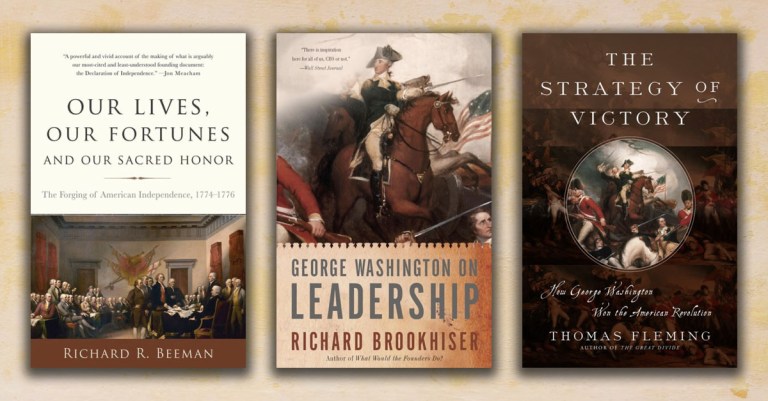
8 Books 4 Your Independence Day Reading List
Summer is finally here, which means July 4th is right around the corner! Independence Day isn’t just about barbeque cookouts, fireworks, and baseball games, it’s about the ratification of the Declaration of the Independence. Independence Day events and celebrations across our great country commemorate the birth of American Independence. So, relax and enjoy this holiday book list that’s sure to kick off your July 4th reading!
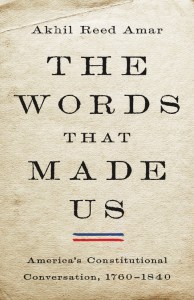
This is a history of the American Constitution's formative decades from a preeminent legal scholar. Akhil Reed Amar examines the origins of the Constitution and the weighty questions and discussions that early Americans had that continued after its ratification, such as should the nation's borders be expanded, should America allow slavery to spread westward, what rights should Indian nations hold, and what was the proper role of the judicial branch?

When discussing the start of the United States of America, everyone mentions the founding fathers, such as George Washington and Benjamin Franklin. In fact, in most stories of US history, only the major figures get mentioned. But this books covers many of the lesser-known figures in who played integral roles in American history, good and bad, such as Margaret Shippen, wife of notorious traitor Benedict Arnold, and Annie Turner Wittenmyer, who took charge of supplying Union hospitals in the West during the Civil War.

Thomas Paine was one of the most prolific, inspiring writers of his time. The most widely read political writer of his generation, he was a thinker ahead of his time, conceiving and demanding social reforms that are now integral elements of modern republican societies. Paine's ideas helped shape the Declaration of Independence and the Bill of Rights, but historian Harlow Giles Unger also explains how his later works turned him into an outcast.
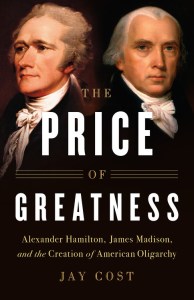
An incisive account of the tumultuous relationship between Alexander Hamilton and James Madison and of the origins of our wealthy yet highly unequal nation. In the history of American politics there are few stories as enigmatic as that of Alexander Hamilton and James Madison’s bitterly personal falling out. Together they helped bring the Constitution into being, yet soon after the new republic was born they broke over the meaning of its founding document. Hamilton emphasized economic growth, Madison the importance of republican principles.
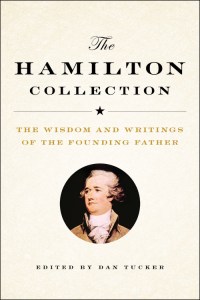
The smash-hit musical Hamilton presents its central character as a truth-telling immigrant boot-strapper who used his extraordinary intelligence to make good — but what was he really like? Let the man himself, a prolific and extremely effective writer, tell his story in his own words. Organized chronologically, this collection of Alexander Hamilton’s personal letters, business and governmental correspondence, and excerpts from his most important published writings (including the Federalist Papers) gives readers first-hand insight into this highly influential founding father who engineered the ratification of the US Constitution, created the United States’ financial system, and established friendly trade relations with Britain.

On December 16, 1773, an estimated seven dozen men dumped roughly £10,000 worth of tea in Boston Harbor. This symbolic act unleashed a social, political, and economic firestorm throughout the colonies. Combining stellar scholarship with action-packed history, American Tempest reveals the truth behind the legendary event and examines its lasting consequence–the birth of an independent America.
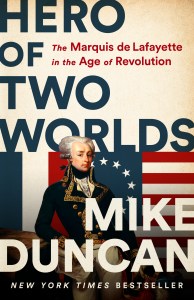
Few in history can match the revolutionary career of the Marquis de Lafayette. Over fifty incredible years at the heart of the Age of Revolution, he fought courageously on both sides of the Atlantic. He was a soldier, statesman, idealist, philanthropist, and abolitionist. From enthusiastic youth to world-weary old age, from the pinnacle of glory to the depths of despair, Lafayette never stopped fighting for the rights of all mankind. His remarkable life is the story of where we come from, and an inspiration to defend the ideals he held dear.
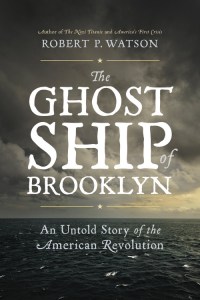
The most horrific struggle of the American Revolution occurred just 100 yards off New York, where more men died aboard a rotting prison ship than were lost to combat during the entirety of the war. Moored off the coast of Brooklyn until the end of the war, the derelict ship, the HMS Jersey, was a living hell for thousands of Americans either captured by the British or accused of disloyalty. Crammed below deck — a shocking one thousand at a time — without light or fresh air, the prisoners were scarcely fed food and water. Disease ran rampant and human waste fouled the air as prisoners suffered mightily at the hands of brutal British and Hessian guards. Throughout the colonies, the mere mention of the ship sparked fear and loathing of British troops. It also sparked a backlash of outrage as newspapers everywhere described the horrors onboard the ghostly ship. This shocking event, much like the better-known Boston Massacre before it, ended up rallying public support for the war.
By clicking ‘Sign Up,’ I acknowledge that I have read and agree to Hachette Book Group’s Privacy Policy and Terms of Use